

 EN
EN  ES
ES UTP sources PT6A-27 and PT6A-28 turboprop engines for sale in new, used, and overhauled condition—both variants deliver 680 shaft horsepower and serve Cessna 208 Caravan, Pilatus PC-6, and Piper Navajo Chieftain operators with strong secondary market availability.
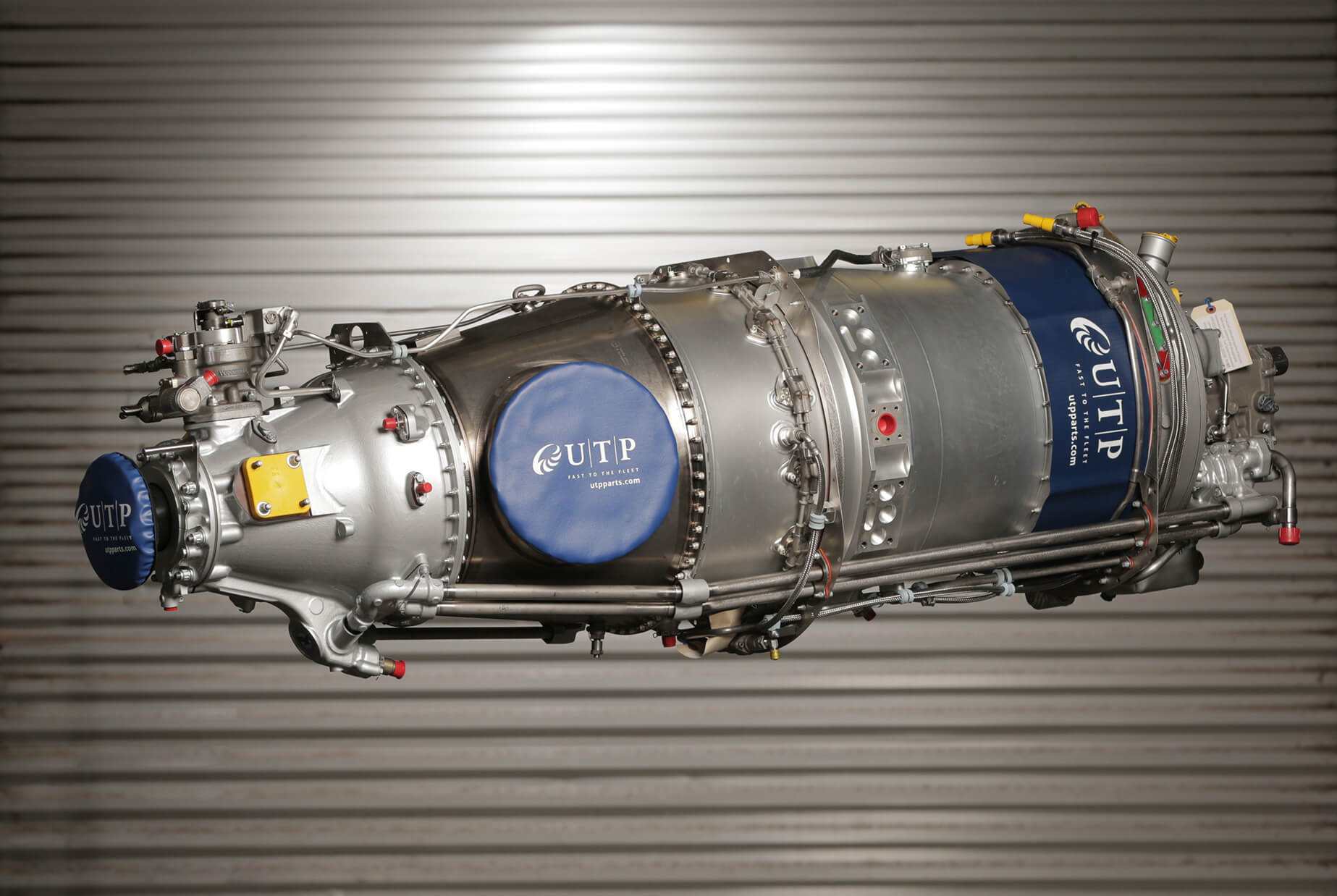
PT6A-27 and PT6A-28: Understanding the Two Variants
The PT6A-27 and PT6A-28 are closely related members of the PT6A engine family, sharing the same 680 shaft horsepower output and core gas generator design. They are often grouped together in the secondary market because of their similar power ratings, but they are distinct variants with different Type Certificate approvals, different airframe applications, and different installation configurations.
The PT6A-27 was certified earlier and powers a broader range of aircraft, including the Cessna 208 Caravan (early production), Pilatus PC-6 Porter, de Havilland DHC-6 Twin Otter, and several agricultural and utility platforms. The PT6A-28 was developed for twin-engine light transport applications, most notably the Cessna 402C and Piper PA-31 Navajo Chieftain, with different reduction gearbox configurations and accessory pad layouts suited to those airframe installations.
Neither variant is interchangeable with the other without an FAA-approved STC or engineering order. Buyers must confirm the required variant against their specific aircraft Type Certificate Data Sheet before initiating any sourcing process. UTP verifies variant-to-airframe applicability against aircraft serial number and configuration before presenting any options.
PT6A-27 vs PT6A-28: Specification Comparison
The table below provides a direct side-by-side comparison of the PT6A-27 and PT6A-28 for buyers evaluating their specific requirements.
| Specification | PT6A-27 | PT6A-28 |
| Shaft Horsepower | 680 shp | 680 shp |
| TBO | 3,600 hours | 3,600 hours |
| Primary Airframes | Cessna 208 Caravan (early), Pilatus PC-6, DHC-6 | Cessna 402C, Piper PA-31 Navajo Chieftain |
| Typical Application | Single-engine utility, cargo, agricultural | Light twin-engine transport |
| Secondary Market Depth | Very high—large installed fleet | Moderate—smaller installed fleet |
| Core Availability | Strong; consistent supply from fleet retirements | Available; sourced through dealer networks |
| Interchangeable? | No—STC or engineering order required | No—STC or engineering order required |
PT6A-27 and PT6A-28 Airframe Applications
PT6A-27 Approved Airframes
The PT6A-27 powers a broad range of utility, cargo, and multi-role aircraft. Key approved platforms include:
- Cessna 208 Caravan: early production; later Caravan variants use the PT6A-114 series
- Pilatus PC-6 Porter: Swiss STOL utility aircraft widely used in cargo, parachuting, and bush operations
- de Havilland Canada DHC-6 Twin Otter: a primary regional commuter and floatplane platform
- Britten-Norman BN-2 Islander: light twin commuter and utility
- Multiple agricultural spray aircraft platforms approved under type certificate
PT6A-28 Approved Airframes
The PT6A-28 was designed for light twin-engine transport applications:
- Cessna 402C Businessliner/Utililiner: primary application; widely used in regional cargo and charter
- Piper PA-31 Navajo Chieftain: twin-engine business and charter transport
- Additional twin-engine platforms as specified in the PT6A-28 TCDS
How UTP Sources PT6A-27 and PT6A-28 Engines
PT6A-27 secondary market availability is among the strongest in the PT6A family. The large installed base of Cessna 208 Caravans, Pilatus PC-6 aircraft, and DHC-6 Twin Otters generates consistent supply of run-out cores, serviceable mid-time units, and freshly overhauled engines. For common conditions and configurations, UTP typically identifies qualified PT6A-27 options within 5 to 15 business days.
PT6A-28 sourcing volume is lower due to the smaller installed fleet, but serviceable and overhauled units are regularly available through UTP established supplier and dealer networks. Lead times for PT6A-28 units may be slightly longer than PT6A-27, particularly for specific condition requirements. AOG situations for both variants receive priority handling. Contact UTP directly with your variant, serial number, required condition, and timeline for current availability.
PT6A-27 and PT6A-28 Condition Guide
New / Zero-Time
Factory-new PT6A-27 and PT6A-28 engines are available on a limited basis, primarily as new surplus units. New factory production of the PT6A-27 has wound down as later variants replaced it in current-production aircraft, making new units increasingly scarce. New surplus units require careful storage records review before accepting for installation.
Serviceable MID-TIME
Operated PT6A-27 and PT6A-28 engines with documented TSN and TSO remaining. Value is determined by remaining TBO hours, logbook integrity, AD compliance status, and the condition of the hot section verified through a borescope inspection. Given the strong overhaul infrastructure for these variants, mid-time units offer strong value for operators with near-term budget constraints. A borescope report from an independent A&P mechanic is standard due diligence.
Overhauled / Zero-Time Since Overhaul
PT6A-27 and PT6A-28 engines restored to serviceable or new-limits condition by an FAA-certificated repair station with appropriate PT6A ratings. A zero-time overhaul ships with a new FAA Form 8130-3 and resets both TSN and TSO. The PT6A-27 is supported by a robust overhaul industry due to its large installed fleet, giving buyers multiple qualified overhaul facility options. Confirm current FAA repair station certificate and PT6A-27 or PT6A-28 specific ratings before accepting any overhauled unit.
Run-Out / Core
PT6A-27 cores are consistently available from fleet retirements and scheduled overhaul events. Core value depends on variant, TSN/TSO, logbook completeness, and physical condition of the hot section and gearbox. PT6A-27 cores are accepted by UTP as trade-in toward a serviceable or overhauled replacement unit. Core exchange programs reduce out-of-pocket acquisition cost for operators managing budget constraints.
What PT6A-27 and PT6A-28 Buyers Most Often Get Wrong
The most common error specific to these variants is assuming PT6A-27 and PT6A-28 interchangeability because of the matching 680 shp power rating. The shared power output creates a false impression that the two engines are equivalent, but they are not. Their airframe approvals, gearbox configurations, and installation requirements are distinct. Buying a PT6A-28 for a PT6A-27 application—or vice versa—creates an immediate airworthiness finding and cannot be corrected without a specific STC or engineering order.
The second common mistake is undervaluing the PT6A-27 logbook history for aircraft participating in agricultural operations. Agricultural PT6A-27 applications accumulate hours under more demanding operating conditions, and the hot section condition at a given TSO may differ significantly from an equivalent-hour engine in utility or cargo service. Always request a current borescope inspection report regardless of documented hours when sourcing a PT6A-27 from agricultural service.
PT6A-27/28 Engine Buying Checklist
- Confirm exact variant, PT6A-27 or PT6A-28, against aircraft TCDS and serial number
- Verify complete and continuous logbook records from new with no missing entries or unexplained gaps
- Request full AD compliance record—verify all applicable directives addressed with no open items
- Request current borescope inspection report, particularly if aircraft was in agricultural service
- Confirm overhaul facility holds current FAA repair station certificate with PT6A ratings
- Verify FAA Form 8130-3 is present, current, and matches the engine serial number exactly
- Confirm all STC documentation transfers with the engine if any modification has been applied
PT6A-27 and PT6A-28 Engine Pricing: Market Overview
PT6A-27 and PT6A-28 engines trade at the entry-to-mid range of the PT6A price spectrum, reflecting their 680 shp power class and the depth of secondary market supply for the PT6A-27 in particular. Pricing is influenced by condition class, remaining TBO, logbook quality, and the specific overhaul facility involved for overhauled units.
| Market pricing as of Q2 2026. Prices vary by condition, remaining TBO, and current market availability. |
| Condition | PT6A-27 Typical Range | PT6A-28 Typical Range | Notes |
|---|---|---|---|
| Run-out / Core | $40,000 – $80,000 | $40,000 – $75,000 | Exchange value; depends on logbook completeness and hot section |
| Serviceable Mid-Time | $90,000 – $180,000 | $85,000 – $170,000 | Exchange value; depends on logbook completeness and hot section |
| Overhauled / Zero-Time | $150,000 – $250,000 | $140,000 – $230,000 | Confirm overhaul facility ratings and overhaul scope |
| New / Factory New | Market on request | Market on request | Increasingly scarce; storage records verification required |
The PT6A-27 typically prices at a modest premium over the PT6A-28 at equivalent condition levels, reflecting stronger demand from the larger Cessna 208 Caravan and Pilatus PC-6 operator base. Total cost of ownership, factoring in remaining TBO hours, overhaul history, and AD compliance status, is a more reliable guide than acquisition price alone.
How to Buy a PT6A-27 or PT6A-28 Engine from UTP
Start with a direct inquiry. Provide your aircraft make, model, serial number, required variant (PT6A-27 or PT6A-28), preferred condition, and timeline. UTP confirms variant-to-airframe compatibility, initiates sourcing through its global network, and presents qualified options with full documentation details before any commitment is required.
Support includes:
- Variant compatibility confirmation against aircraft TCDS and serial number
- Logbook and documentation review on every option before presentation
- Coordination of pre-purchase borescope inspections when required
- Core exchange valuation for operators trading in a run-out or time-expired engine
- AOG expedite handling for time-critical sourcing requirements
All PT6A-27 and PT6A-28 engines ship with complete logbook copies, current FAA Form 8130-3 airworthiness documentation, and an AD compliance summary. Export documentation and EASA Form 1 equivalency paperwork available for international buyers.
Frequently Asked Questions—PT6A-27 and PT6A-28 Engines
The PT6A-27 and PT6A-28 both produce 680 shaft horsepower and share the same core gas generator design, but they are approved for different airframes and have distinct installation configurations. The PT6A-27 is approved for the Cessna 208 Caravan (early models), Pilatus PC-6, and de Havilland DHC-6 Twin Otter among others. The PT6A-28 is approved for the Cessna 402C and Piper Navajo Chieftain, with different reduction gearbox configurations and accessory pad layouts. The two variants are not interchangeable without an FAA-approved STC or engineering order.
The PT6A-27 is approved for numerous fixed-wing aircraft including the Cessna 208 Caravan (early production), Pilatus PC-6 Porter, de Havilland DHC-6 Twin Otter, Britten-Norman Islander, and several agricultural and utility platforms. The complete list of approved airframes is specified in the PT6A-27 Type Certificate Data Sheet. Always verify approval against your specific aircraft serial number and configuration before sourcing. UTP confirms TCDS applicability before presenting any PT6A-27 sourcing options.
Both the PT6A-27 and PT6A-28 carry a standard time-between-overhaul (TBO) of 3,600 hours under normal operating conditions. Some operators participate in Pratt & Whitney Canada on-condition maintenance programs that allow TBO extension beyond 3,600 hours based on engine health monitoring data. TBO extension eligibility depends on operator program enrollment, operating environment, and engine condition at each scheduled inspection. Contact your maintenance organization or Pratt & Whitney Canada regional support for program eligibility details.
In some cases, yes. Several STCs exist that allow PT6A-27 powered aircraft to be upgraded to higher-power variants such as the PT6A-34 in specific airframes. For example, certain Cessna 208 Caravan configurations have approved upgrades to the PT6A-114A. The availability of an STC depends on the specific airframe, serial number range, and the STC holder. STC documentation must accompany the aircraft and be on file with the maintenance operation. UTP can assist with variant sourcing once the appropriate STC has been confirmed for your specific aircraft.
The PT6A-27 benefits from one of the strongest secondary market positions in the PT6A family, driven by the large installed base of Cessna 208 Caravans, Pilatus PC-6 aircraft, and DHC-6 Twin Otters in service globally. This installed fleet depth generates consistent supply of run-out cores, mid-time serviceable units, and overhauled engines entering the market. Lead times for qualified PT6A-27 options are typically among the shortest in the PT6A family. PT6A-28 secondary market volume is lower due to a smaller installed fleet, but serviceable and overhauled units are regularly available through UTP sourcing networks.
Yes. UTP accepts PT6A-27 and PT6A-28 engine cores as trade-in toward the purchase of a serviceable or overhauled replacement unit. Core value is assessed based on the specific variant, TSN, TSO, logbook completeness, and physical condition of major components including the hot section and reduction gearbox. PT6A-27 cores typically command strong exchange value due to consistent market demand. Contact UTP with your engine variant, serial number, TSN, and TSO to initiate a core evaluation and receive an exchange quote.