

 EN
EN  ES
ES UTP sources PT6A-42 turboprop engines for sale in new, used, and overhauled condition—the 850 shp engine powering the early Pilatus PC-12, Cessna 425 Conquest, and related platforms, with active secondary market availability.
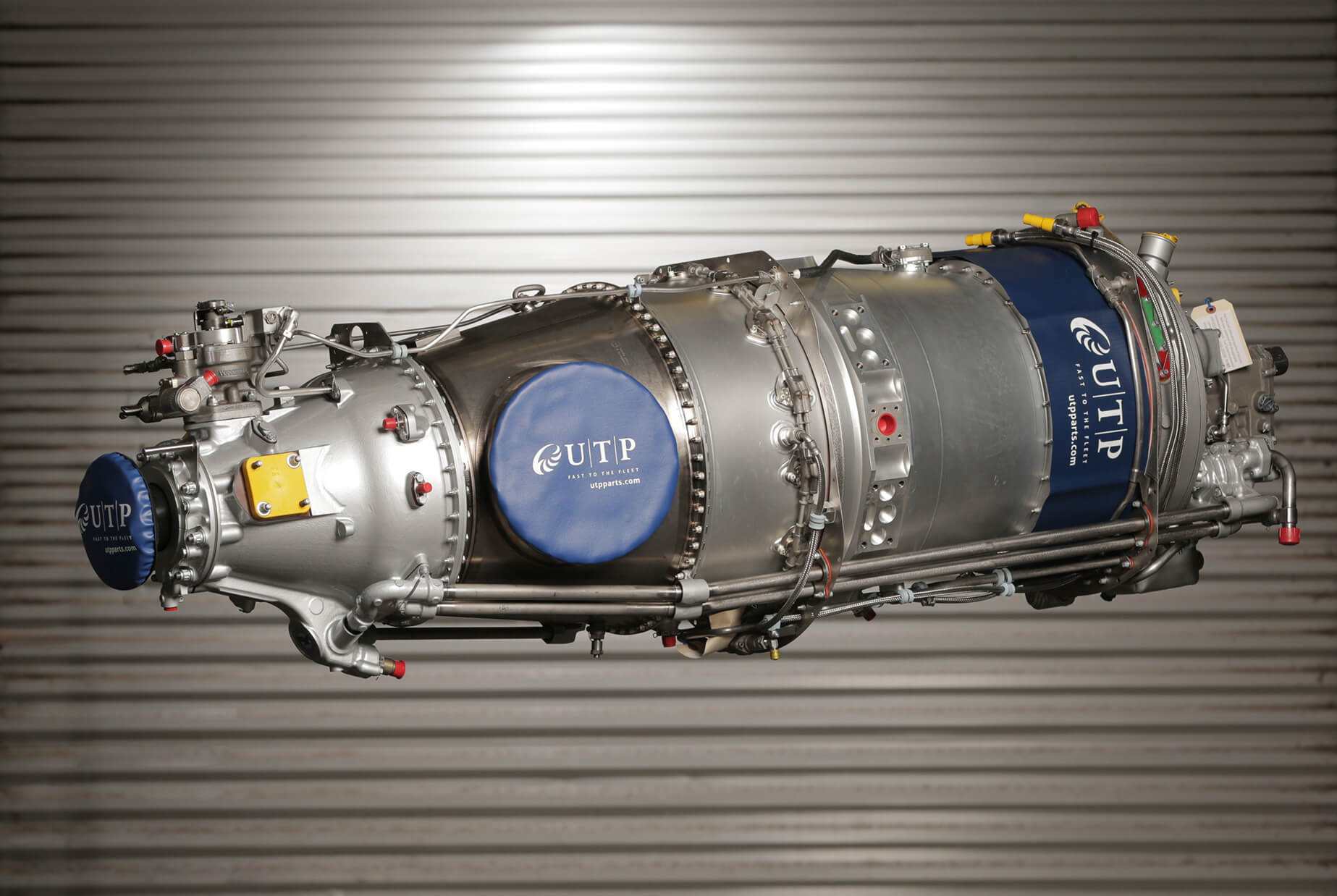
PT6A-42 Engine Profile: The 850 shp Mid-Utility Class
The PT6A-42 occupies the 850 shaft horsepower tier of the PT6A family, positioned between the widely deployed 750 shp PT6A-34 and the commuter/corporate-class PT6A-52 and PT6A-60A variants above it. This power class serves operators who need meaningfully more output than the PT6A-34 delivers, without the greater size, weight, and cost of moving to the mid-range class engines.
The PT6A-42 is a free-turbine turboprop engine sharing the same fundamental design architecture as the broader PT6A family: a reverse-flow gas generator driving a two-stage power turbine, which in turn drives the propeller through a reduction gearbox. The variant has accumulated a solid installed base across business, utility, and single-engine turboprop applications where the 850 shp class provides the right performance envelope.
Both the PT6A-42 and its derivative PT6A-42A are active in the secondary market. Buyers must confirm the exact variant designation required by their aircraft Type Certificate Data Sheet before initiating any sourcing process—the two variants are distinct Part Numbers with different approved applications and are not interchangeable without an FAA-approved STC or engineering order.
PT6A-42 Airframe Applications
The PT6A-42 is approved for a range of certified aircraft. Primary applications include:
| Aircraft | Role | Notes |
| Pilatus PC-12 (early configurations) | Single-engine business/utility | Confirm exact PT6A variant against aircraft serial number and TCDS |
| Cessna 425 Conquest | Twin-engine business | Verify PT6A-42 vs PT6A-42A designation for specific serial number range |
| Additional platforms per TCDS | Varies by application | Confirm required designation via aircraft TCDS before sourcing |
PT6A-42 vs PT6A-42A: Key Distinctions
The PT6A-42A is a derivative variant of the PT6A-42 with modified performance specifications and distinct approved airframe applications. While both variants operate within the same general power class and share core design elements, they carry different Part Numbers and are approved for different aircraft installations.
Installing a PT6A-42 in an airframe that requires a PT6A-42A—or vice versa—creates an airworthiness finding that cannot be resolved without a specific FAA-approved STC or engineering authorization. This is the same interchangeability limitation that applies across the entire PT6A family. Buyers should confirm the correct designation from the aircraft TCDS and provide this to UTP at the start of the sourcing process. UTP cross-references the required variant against aircraft serial number before presenting any options.
PT6A-42 in the PT6A Power Class: How It Compares
Understanding where the PT6A-42 sits in the broader PT6A family helps operators and buyers make informed sourcing and upgrade decisions. The table below provides a direct comparison of the PT6A-42 against the adjacent variants in the 680 to 1,100 shp power band.
PT6A-42 Power Class Comparison — Adjacent Variants
| Variant | SHP | TBO | Market Depth | Notes |
|---|---|---|---|---|
| PT6A-34 | 750 shp | 3,600 | Very High | Entry to this power band; largest installed fleet in class |
| PT6A-42 | 850 shp | 3,600 | Moderate | Mid-utility; smaller installed fleet than PT6A-34 |
| PT6A-42A | 850 shp | 3,600 | Moderate | Derivative variant; distinct Part Number and applications |
| PT6A-52 | 1,100 shp | M3,600 | Moderate | King Air 350 engine; step up to corporate/commuter class |
| PT6A-60A | 1,050 shp | 3,500 | High | Deepest market at mid-power; King Air 200 dominant |
The PT6A-42 secondary market volume is lower than the PT6A-34 or PT6A-60A due to the smaller installed fleet. This means fewer engines enter the market at any given time, but also means less competition when qualified units are available. Lead times for PT6A-42 sourcing typically run 10 to 20 business days depending on required condition and specific variant designation.
How UTP Sources PT6A-42 Engines
UTP sources PT6A-42 and PT6A-42A engines through its established relationships with overhaul facilities, aircraft dealers, fleet operators, and engine brokers active in the business aviation and utility turboprop markets. The PT6A-42 trades regularly through these networks despite its smaller installed fleet relative to higher-volume variants.
When sourcing begins, UTP confirms the exact variant designation required (PT6A-42 or PT6A-42A), the aircraft serial number and configuration, the preferred condition class, and any operational history preferences. Options are presented with full documentation details after a preliminary documentation review. AOG situations receive priority handling—contact UTP directly with your specific variant and timeline for expedited response.
PT6A-42 Engine Condition Guide
New / Zero-Time
Factory-new PT6A-42 and PT6A-42A engines are available on a limited basis as new surplus stock. OEM new production of the PT6A-42 has largely wound down as later variants replaced it in current-production aircraft. New surplus units require storage records verification before installation. Highest acquisition cost and lowest near-term maintenance exposure.
Serviceable MID-TIME
Operated PT6A-42 engines with documented TSN and TSO remaining. Mid-time units offer strong value for operators managing near-term budget constraints. Standard due diligence applies: complete logbook review, current AD compliance verification, and a borescope inspection from an independent A&P mechanic. The moderate secondary market depth means mid-time PT6A-42 units are regularly available but may require slightly longer lead times than high-volume variants.
Overhauled / Zero-Time Since Overhaul
PT6A-42 engines restored to serviceable or new-limits condition by an FAA-certificated repair station holding appropriate PT6A ratings. A zero-time overhaul resets both TSN and TSO and ships with a new FAA Form 8130-3. The PT6A-42 is supported by the same overhaul network that services the broader PT6A family, with multiple qualified repair stations available. Confirm the facility holds current FAA repair station certification and specific PT6A-42 authorization.
Run-Out / Core
PT6A-42 cores are available from scheduled overhaul events and fleet transitions. Core value depends on variant (PT6A-42 vs PT6A-42A), TSN/TSO, logbook completeness, and physical condition of the hot section and gearbox. UTP accepts PT6A-42 and PT6A-42A cores as trade-in toward serviceable or overhauled replacement units. Contact UTP with variant, serial number, TSN, and TSO for a core evaluation.
What Most PT6A-42 Buyers Get Wrong
The most common mistake in PT6A-42 transactions is failing to confirm the PT6A-42 vs PT6A-42A distinction before beginning a sourcing process. Buyers who request a PT6A-42 without specifying the exact variant designation risk being matched with a PT6A-42A that is not approved for their airframe—or vice versa. Unlike the higher-volume variants where the single designation is clear, the existence of the PT6A-42A creates an applicability question that must be answered against the aircraft TCDS before any purchase discussion begins.
The second common issue is underestimating PT6A-42 lead times relative to the PT6A-34 or PT6A-60A. Buyers accustomed to the deep secondary market supply of those variants occasionally assume comparable availability for the PT6A-42. The smaller installed fleet means fewer units come to market at any given time, and buyers with rigid timelines should initiate sourcing earlier than they would for higher-volume variants. AOG situations are handled on a priority basis, but proactive planning reduces cost and timeline pressure.
PT6A-42 Engine Buying Checklist
- Confirm exact variant designation—PT6A-42 or PT6A-42A—against aircraft TCDS and serial number
- Verify complete and continuous logbook records from new with no missing entries
- Confirm full AD compliance record with all applicable directives addressed
- Request current borescope inspection report from an independent A&P mechanic
- Confirm overhaul facility holds current FAA repair station certificate with PT6A ratings
- Verify FAA Form 8130-3 is present, current, and matches the engine serial number
- Confirm all STC and modification documentation transfers with the engine at closing
PT6A-42 Engine Pricing: Market Overview
PT6A-42 engines trade at a premium to the PT6A-34 due to the higher power output, smaller available supply, and the higher overhaul cost associated with the 850 shp class. Pricing is influenced by condition, remaining TBO, variant designation, and current secondary market availability.
| Market pricing as of Q2 2026. Prices reflect the PT6A-42 power class premium versus lower-horsepower variants. |
| Condition | Typical Price Range | Notes |
| Run-out / Core | $50,000 – $110,000 | Premium to PT6A-34 cores; reflects 850 shp class and overhaul cost |
| Serviceable Mid-Time | $120,000 – $240,000 | Evaluate remaining TBO, logbook integrity, and hot section condition |
| Overhauled / Zero-Time | $200,000 – $350,000 | Full overhaul with PT6A-42 ratings required from certificated facility |
| New / Factory New | Market on request | Limited availability; storage verification required |
The PT6A-42 carries a price premium of approximately 15 to 30 percent over comparable PT6A-34 units at equivalent condition levels. This reflects the genuine market difference between the two power classes and should be factored into total cost of ownership analysis when evaluating whether to source a PT6A-42 or to pursue an STC upgrade path to a different variant.
How to Buy a PT6A-42 Engine from UTP
Start with a direct inquiry. Provide your aircraft make, model, and serial number, the exact required variant designation (PT6A-42 or PT6A-42A), preferred condition, and timeline. UTP confirms the variant designation, initiates sourcing through its global network, and presents qualified options with full documentation details.
Support includes:
- Exact variant designation confirmation—PT6A-42 or PT6A-42A—against aircraft TCDS
- Logbook and documentation review on every option before presentation
- Pre-purchase borescope inspection coordination when required
- Core exchange valuation for PT6A-42 and PT6A-42A run-out units
- AOG expedite handling for time-critical requirements
All PT6A-42 engines ship with complete logbook copies, current FAA Form 8130-3, and an AD compliance summary. Export documentation and EASA Form 1 equivalency paperwork available for international buyers.
Frequently Asked Questions—PT6A-42 Engines for Sale
The PT6A-42 is approved for a range of business, utility, and commuter aircraft including the early Pilatus PC-12, Cessna 425 Conquest, and additional platforms specified in the PT6A-42 Type Certificate Data Sheet. As with all PT6A variants, the approved engine designation must be verified against the specific aircraft serial number and TCDS before sourcing. UTP confirms applicability against aircraft serial number and configuration before presenting any PT6A-42 options to buyers.
The PT6A-42A is a derivative of the PT6A-42 with modified specifications and approved for different airframe applications. The two variants share the same core architecture and similar power class but are distinct Part Numbers with different approved installations. They are not directly interchangeable without an FAA-approved STC or engineering order. Buyers must confirm the exact variant designation required by their aircraft TCDS before sourcing. UTP verifies the correct designation against aircraft serial number before presenting sourcing options.
The PT6A-42 produces 850 shaft horsepower, placing it between the 750 shp PT6A-34 and the 1,050 to 1,100 shp PT6A-52 and PT6A-60A variants. This intermediate power class fills a specific niche for operators whose aircraft require more power than the PT6A-34 can provide but do not require the heavier, more expensive mid-range turboprops. The PT6A-42 has a smaller installed fleet than the PT6A-34 or PT6A-60A, which means lower secondary market volume but also fewer competing buyers when qualified units become available.
The PT6A-42 secondary market is moderate in depth compared to high-volume variants like the PT6A-34 or PT6A-60A. The installed fleet is smaller, which means fewer engines enter the secondary market in any given period. This typically results in slightly longer sourcing lead times than the most common PT6A variants. However, the PT6A-42 does trade regularly through established dealer and overhaul networks. UTP sources PT6A-42 engines through its global supplier relationships and typically identifies qualified options within 10 to 20 business days depending on required condition.
PC-12 operators evaluating a used PT6A-42 should confirm the exact variant designation approved for their specific aircraft serial number, as the Pilatus PC-12 platform has been produced with multiple PT6A variants across different production years and configurations. A complete logbook review is essential, including documentation of all previous overhaul events and hot section inspections. A current borescope inspection from an independent A&P mechanic is standard due diligence. Buyers should also verify that any STC documentation for approved modifications or upgrades accompanies the engine, and that the overhaul facility holds current FAA repair station certification with appropriate PT6A ratings.
PT6A-42 engines typically carry a price premium of 15 to 30 percent over comparable PT6A-34 units at equivalent condition levels, reflecting the higher power output, smaller available supply, and the higher overhaul cost associated with the 850 shp power class. Run-out PT6A-42 cores generally start around $50,000 versus $40,000 for PT6A-34 cores. Overhauled PT6A-42 units typically range from $200,000 to $350,000 compared to $180,000 to $280,000 for PT6A-34 zero-time overhauls. These premium levels reflect genuine market differences and should be factored into total cost of ownership calculations when evaluating PT6A-42 sourcing options.