

 EN
EN  ES
ES UTP sources PT6A-65B turboprop engines for sale in new, used, and overhauled condition—serving regional commuter, STOL utility, and cargo operators worldwide with active sourcing through global MRO and operator networks.
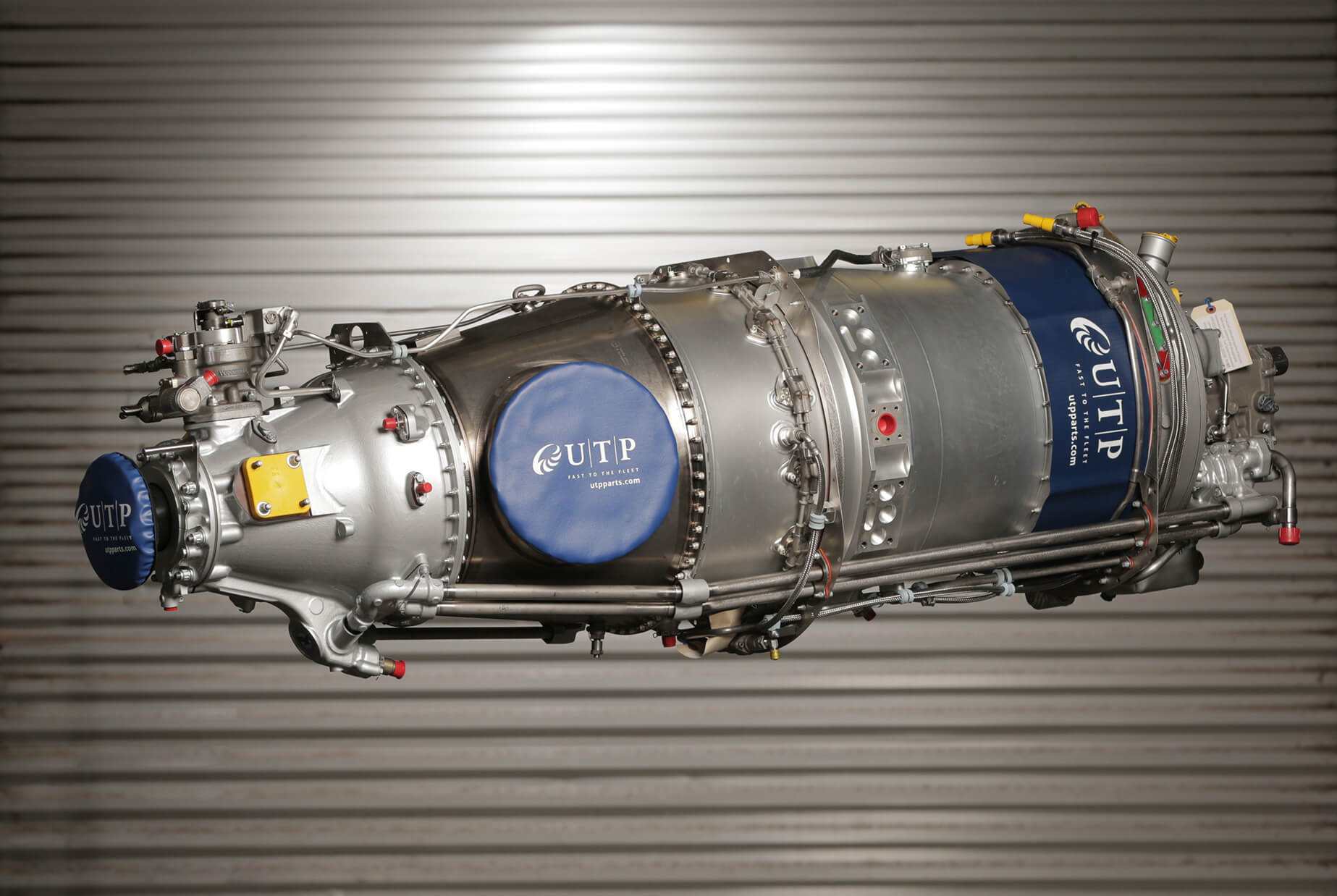
PT6A-65B Engine Profile: Regional Commuter and STOL Utility Powerplant
The PT6A-65B is a member of the PT6A-65 engine family, producing output in the 1,100 shaft horsepower class. It is designed for regional commuter, STOL utility, and cargo aircraft applications that require high power output in compact, field-maintainable packages capable of sustained operation in demanding environments. The PT6A-65 family shares the fundamental free-turbine architecture of the broader PT6A line but is configured for the specific airframe, installation, and operational requirements of its approved platforms.
The PT6A-65B is one of several certified variants within the PT6A-65 family, alongside the PT6A-65AR, PT6A-65R, and others. Each variant in the family carries distinct Type Certificate approvals, installation configurations, and approved airframe applications. None are directly interchangeable with each other without an FAA-approved STC or engineering order. Buyers must confirm the exact PT6A-65B designation against their aircraft TCDS and serial number—confirming “PT6A-65 family” compatibility is insufficient. UTP verifies the specific variant designation at the start of every sourcing engagement.
PT6A-65B Airframe Applications
The PT6A-65B is approved for specific regional commuter and STOL utility aircraft as detailed in the PT6A-65B Type Certificate Data Sheet. Operator populations for PT6A-65B-powered aircraft are concentrated in regional aviation markets globally, including Africa, Southeast Asia, the South Pacific, Latin America, and Northern Canada—markets where STOL and remote-area capability is operationally essential.
| TCDS Verification Required: The approved airframe list for the PT6A-65B is specified in the applicable Type Certificate Data Sheet. Always verify the exact PT6A-65B designation against your specific aircraft serial number and TCDS before initiating any sourcing process. Do not assume applicability based on PT6A-65 family designation alone — each variant has distinct approvals. |
| Application Category | Typical Operator Profile | Sourcing Notes |
| Regional commuter turboprop | Regional airlines, charter, inter-island routes | Verify exact variant per aircraft TCDS and serial number |
| STOL utility and bush service | Bush operators, resource industry, remote access | Harsh environment and high-cycle ops; borescope required |
| Cargo and freight operations | Regional cargo carriers, freight consolidators | Verify cycle count in addition to TSO for cargo-history engines |
| Government and military utility | Aerial surveillance, resource management, patrol | Confirm configuration and any military standard modifications |
The PT6A-65 Engine Family: Understanding Variant Distinctions
The PT6A-65 family encompasses multiple certified variants that share the same basic architecture and power class but serve distinct airframe applications. The key variants active in the secondary market include:
| Variant | Power Class | Key Distinction |
| PT6A-65AR | 1,100 shp (flat-rated) | Approved for specific regional commuter platforms; AR = additional rating |
| PT6A-65B | 1,100 shp | Distinct TCDS approvals and installation configuration from 65AR and 65R |
| PT6A-65R | 1,100 shp | Separate airframe approvals; R = designation variant within the family |
These variants look similar and operate in the same power class. Substituting one for another without the appropriate FAA authorization creates an immediate airworthiness finding. If your aircraft TCDS specifies PT6A-65B, that is the only variant that can be installed without engineering authorization—regardless of what other PT6A-65 family variants may be available at a lower price or shorter lead time.
Sourcing PT6A-65B Engines: The Lower-Volume Variant Approach
The PT6A-65B presents sourcing dynamics that differ significantly from high-volume variants like the PT6A-34 or PT6A-60A. With a smaller installed fleet and more geographically dispersed operator base, PT6A-65B sourcing requires a different approach than simply querying a large domestic inventory pool.
UTP sources PT6A-65B engines through an active international network that includes:
- Overhaul facilities with PT6A-65 family ratings in North America, Europe, and the Asia-Pacific region
- Regional airline operators and maintenance organizations in Africa, Southeast Asia, and the South Pacific
- Aircraft dealers and fleet transition programs in markets where PT6A-65B powered aircraft change hands
- Engine broker networks with active coverage of lower-volume PT6A variants
- MRO facilities in Latin America and Northern Canada where STOL and utility operations are concentrated
This international network allows UTP to identify PT6A-65B options that are not visible through standard North American market channels. For lower-volume variants, off-market access through established relationships is often the difference between a 15-day and a 60-day sourcing timeline.
PT6A-65B Operating Environment: What It Means for Condition Assessment
PT6A-65B powered aircraft operate in some of the most demanding environments in commercial aviation. STOL operations, bush flying, resource industry support, and remote-area regional routes share several operating characteristics that affect engine condition in ways that TSO alone does not capture.
Dust and Particulate Ingestion
STOL and bush operations frequently involve unprepared or semi-prepared airstrips where dust and particulate ingestion accelerates compressor wear. Abrasive material introduced through the inlet degrades compressor blade leading edges and can cause measurable performance deterioration at relatively low TSO. Borescope inspection of the compressor section is essential when evaluating any PT6A-65B from an environment with high dust or particulate exposure.
High-Cycle Short-Sector Operations
Regional and inter-island routes served by PT6A-65B-powered aircraft generate multiple cycles per flight hour due to short sector lengths. A PT6A-65B with 2,000 hours TSO from a high-frequency regional route may have accumulated 5,000 to 8,000 thermal cycles, accelerating hot section wear beyond what the TSO suggests. Cycle count documentation should accompany any PT6A-65B sourced from a high-frequency regional operator.
High-Altitude Operations
STOL utility operations in mountainous terrain or high-elevation locations require engines to operate at higher power fractions to maintain performance. Sustained high-power operation accelerates turbine section wear and can concentrate degradation in specific hot section components. Operators in high-altitude environments should factor additional hot section inspection scrutiny into PT6A-65B due diligence.
PT6A-65B Lead Time Planning: What Buyers Need to Know
Lead time planning is significantly more important for PT6A-65B buyers than for operators of high-volume variants. The smaller available market means that waiting until a maintenance event is imminent before beginning sourcing creates avoidable AOG risk, particularly for operators in remote locations where logistics compound the timeline.
UTP recommends the following sourcing lead time planning guidance for PT6A-65B operators:
| Situation | Recommended Lead Time | Notes |
| Scheduled maintenance event (planned) | 60–90 days minimum | Start sourcing at first scheduled engine inspection prior to the maintenance event |
| Approaching TBO (within 500 hours) | 45–60 days minimum | Begin sourcing before TBO to avoid AOG at or after TBO limit |
| AOG — immediate requirement | Contact UTP same day | UTP activates international network immediately; timeline depends on available options |
| Core exchange (run-out engine) | 30–45 days typical | Core inventory available; serviceable replacement requires standard sourcing timeline |
Remote-area operators should add buffer time for international shipping, import documentation, and local customs clearance when planning engine sourcing timelines. UTP prepares export documentation and coordinates international logistics as part of the delivery process, but these steps require advance planning and adequate lead time.
PT6A-65B Engine Condition Guide
New / Zero-Time
Factory-new PT6A-65B engines are available on a limited basis. OEM new production supports current airframe deliveries but new surplus units for the secondary market are infrequent. New units carry the full TBO, complete manufacturer documentation, and the lowest near-term maintenance exposure. Highest acquisition cost; verify storage records for any new surplus unit before accepting.
Serviceable Mid-Time
Operated PT6A-65B engines with documented TSN and TSO. For STOL and high-cycle-history engines, cycle count documentation in addition to TSO is essential. Borescope inspection and compressor condition review are standard due diligence regardless of the operating environment. Mid-time units are the most commonly available condition class in the PT6A-65B secondary market.
Overhauled / Zero-Time Since Overhaul
PT6A-65B engines restored by an FAA-certificated repair station with PT6A-65 family ratings. A zero-time overhaul ships with a new FAA Form 8130-3 and resets both TSN and TSO. Confirm the facility holds current certification and specific PT6A-65B authorization. Given the international operator base, some PT6A-65B overhauls are performed by non-U.S. facilities; confirm EASA or equivalent regulatory approval for internationally-sourced overhauled units.
Run-Out / Core
PT6A-65B cores are available from scheduled TBO events in regional aviation markets. Core value depends on TSN/TSO, cycle count, logbook completeness, and physical condition of the hot section. UTP accepts PT6A-65B cores as trade-in toward serviceable or overhauled replacement units. Contact UTP with the engine serial number, TSN, TSO, and operating history for a core evaluation.
PT6A-65B Engine Buying Checklist
- Confirm exact PT6A-65B variant designation—not simply PT6A-65 family—against aircraft TCDS and serial number
- Verify complete and continuous logbook records from new with no missing entries
- Confirm full AD compliance record with all applicable airworthiness directives addressed
- Request current borescope inspection report covering both hot section and compressor
- For STOL, high-cycle, or remote-area engines: request cycle count and operating environment history
- Confirm overhaul facility holds current FAA or equivalent regulatory certification with PT6A-65B authorization
- Verify FAA Form 8130-3 or EASA Form 1 equivalent is present and matches the engine serial number
PT6A-65B Engine Pricing: Market Overview
PT6A-65B engines trade in the mid-to-high tier of the PT6A price spectrum, consistent with the 1,100 shp power class. Secondary market pricing for lower-volume variants reflects the smaller available pool and longer sourcing timelines—buyers should expect a modest premium relative to equivalent-condition high-volume variants due to scarcity rather than higher intrinsic value.
| Market pricing as of Q2 2026. Prices reflect the PT6A-65B lower-volume market. STOL or harsh-environment history engines typically price at a discount to equivalent-TSO business aviation or commuter engines. |
| Condition | Typical Price Range | Notes |
| Run-out / Core | $60,000 – $110,000 | STOL and harsh-environment cores may price lower based on hot section condition |
| Serviceable Mid-Time | $140,000 – $270,000 | Verify cycle count and operating environment; borescope report required |
| Overhauled / Zero-Time | $230,000 – $350,000 | Confirm PT6A-65B-specific authorization at overhaul facility |
| New / Factory New | Market on request | Limited availability; storage records verification required |
Total cost of ownership for PT6A-65B operators should account for the logistics cost of spare parts and potential engine sourcing in remote or international locations. Proactive maintenance planning and early sourcing initiation are the most effective cost management tools for PT6A-65B operators in remote markets.
How to Buy a PT6A-65B Engine from UTP
Start with a direct inquiry. Provide your aircraft make, model, and serial number, the confirmed PT6A-65B variant designation, required condition, operating environment (STOL, regional commuter, cargo), and timeline. UTP confirms variant applicability, activates its international sourcing network, and presents qualified options with full documentation details.
Support includes:
- PT6A-65B variant confirmation—not simply PT6A-65 family—against aircraft TCDS
- International sourcing through established networks covering PT6A-65B operator markets globally
- Cycle count and operating environment verification for STOL and high-cycle engines
- Coordination of pre-purchase borescope inspections including compressor section review
- Export documentation and international shipping coordination
- Core exchange valuation for run-out PT6A-65B units
All PT6A-65B engines ship with complete logbook copies, current FAA Form 8130-3 or EASA Form 1 equivalent, and an AD compliance summary. Export documentation, customs support, and international logistics coordination available for remote and international delivery destinations.
Frequently Asked Questions—PT6A-65B Engines for Sale
The PT6A-65B is approved for specific regional commuter and STOL utility aircraft as listed in the PT6A-65B Type Certificate Data Sheet. As with all PT6A variants, the exact approved airframes and applicable serial number ranges must be verified against the specific aircraft TCDS before sourcing. UTP confirms airframe applicability and variant designation against the customer aircraft serial number and current TCDS before presenting any PT6A-65B sourcing options.
The PT6A-65 engine family includes several certified variants, including the PT6A-65AR, PT6A-65B, and PT6A-65R, each with distinct Type Certificate approvals, performance ratings, and approved airframe applications. All produce output in the 1,100 shp power class but differ in installation configuration, accessory pad layout, and reduction gearbox specification. None of the PT6A-65 family variants are interchangeable with each other without an FAA-approved STC or engineering order. Buyers must confirm the exact PT6A-65B designation against the aircraft TCDS before sourcing. UTP verifies the specific variant designation before presenting any options.
The PT6A-65B secondary market is active but more limited in depth compared to high-volume variants such as the PT6A-34 or PT6A-60A. The installed fleet is smaller and more geographically concentrated, with significant operator populations in regional aviation markets across Africa, Southeast Asia, the South Pacific, and Latin America. Sourcing lead times for the PT6A-65B are typically longer than high-volume variants. Please plan for 15 to 30 business days for qualified serviceable or overhauled options. Run-out cores and mid-time units are available through UTP global sourcing networks, though the pool of available options at any given time is smaller than the most common PT6A variants.
Operators of PT6A-65B-powered aircraft in STOL, bush, and remote-area applications should factor several considerations into sourcing decisions. First, logistics: engines shipped to remote locations require careful advance planning for shipping documentation, import permits, and local maintenance support availability. Second, operating environment impact: dust ingestion, frequent short cycles, and high-altitude STOL operations accelerate wear in the hot section and compressor relative to engines in lower-stress environments. A borescope inspection and cycle count review are essential for any used PT6A-65B sourced from a STOL or remote operations environment. Third, AOG response time: operators in remote locations have longer AOG exposure than urban operators, making proactive maintenance planning and appropriate spare engine or parts planning significantly more important.
UTP sources PT6A-65B engines through an active network of international overhaul facilities, regional airline operators, MRO organizations, and engine dealers with coverage across the markets where PT6A-65B-powered aircraft operate most heavily. This includes relationships with operators and maintenance organizations in Africa, Southeast Asia, the South Pacific, and Latin America, where PT6A-65B-powered aircraft represent a significant portion of regional aviation infrastructure. For lower-volume PT6A variants like the PT6A-65B, UTP relies on established international supplier relationships and active market monitoring rather than domestic inventory alone. This network approach allows UTP to identify qualified PT6A-65B options that are not publicly listed and would not be visible through standard market channels.
PT6A-65B buyers should plan for longer sourcing lead times than high-volume variants. For serviceable mid-time or overhauled units, qualified options are typically identified within 15 to 30 business days. Run-out cores are more readily available and can often be identified within 5 to 15 business days. The longer sourcing timeline reflects the smaller installed fleet and more geographically dispersed market compared to high-volume variants. Operators with scheduled maintenance events should initiate sourcing at least 60 to 90 days in advance of the planned work date. For AOG situations, UTP prioritizes PT6A-65B sourcing and activates its international network contacts immediately—contact UTP directly with the engine serial number and required timeline for expedited AOG response.