

 EN
EN  ES
ES UTP sources PT6A-67R turboprop engines for sale in new, used, and overhauled condition—the 1,200 shp engine powering the current-generation Pilatus PC-12 NG, with active sourcing for operators worldwide.
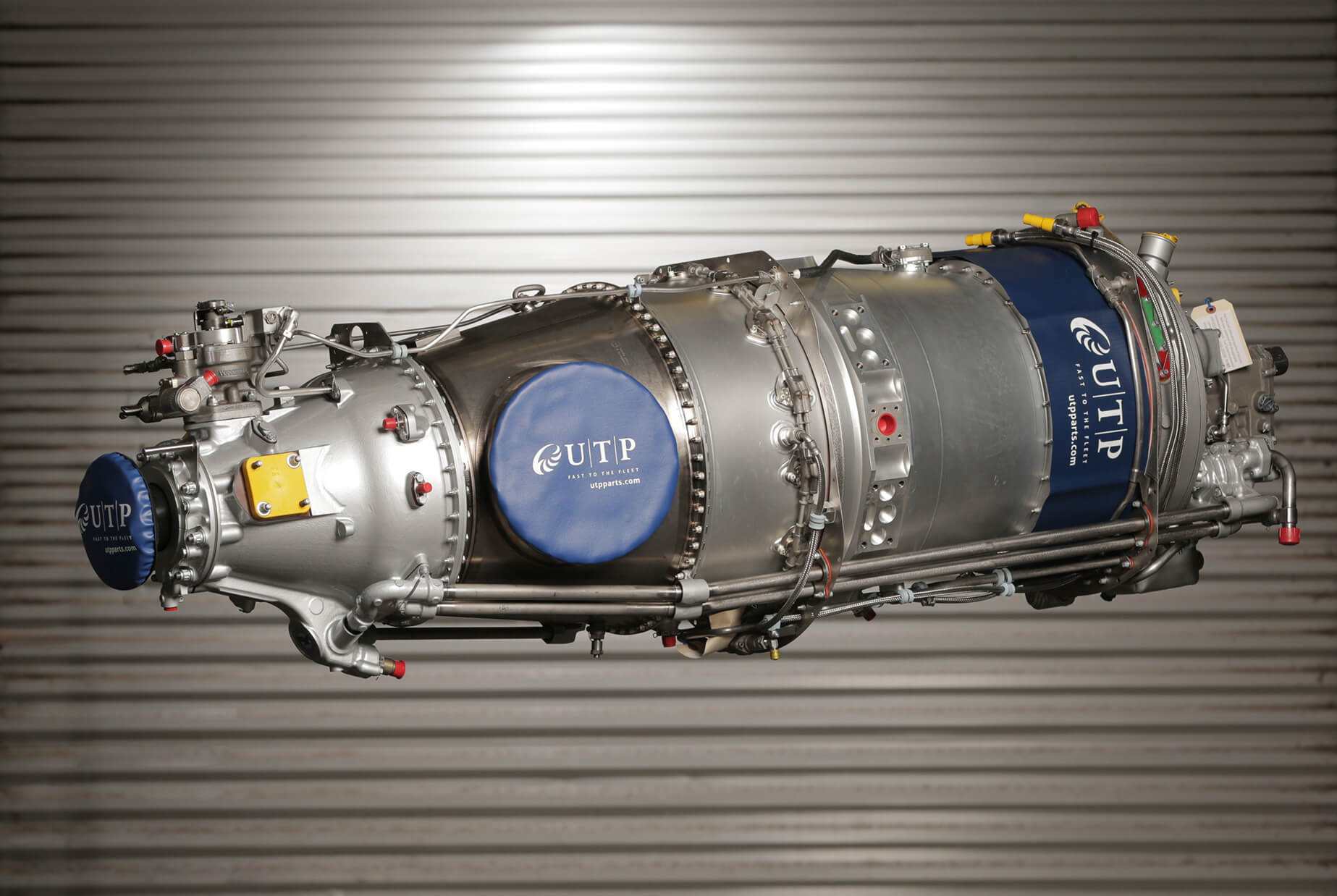
PT6A-67R Engine Profile: The Pilatus PC-12 NG Powerplant
The PT6A-67R produces 1,200 shaft horsepower and is the designated engine for the Pilatus PC-12 NG, the next-generation variant of the acclaimed PC-12 single-engine turboprop. The PC-12 NG represents a significant upgrade over the earlier PC-12/45 production series, featuring the Rockwell Collins Proline 21 avionics suite, enhanced cabin systems, a new five-blade composite propeller, and refinements to the airframe and systems architecture that build on decades of operational experience with the PC-12 platform.
The PC-12 NG entered production in the mid-2000s and continues in production as of the current date, making it a current-generation aircraft with active OEM manufacturing support, updated service documentation, and full parts supply from Pratt & Whitney Canada and the authorized Pilatus service network. This current-production status gives PT6A-67R operators access to the full range of manufacturer support resources that are not available for legacy variants.
As with the PT6A-67D that powers the PC-12/45, the PT6A-67R is the sole source of propulsion on a single-engine aircraft. The operational and maintenance planning considerations that apply to single-engine turboprops—proactive TBO planning, AOG response preparedness, and documentation quality standards—apply equally to PT6A-67R operators.
PT6A-67R vs PT6A-67D: Same Family, Different Platform Generations
The PT6A-67R and PT6A-67D are both PT6A-67 family variants producing approximately 1,200 shaft horsepower. They power different production generations of the Pilatus PC-12 and are not interchangeable. Understanding the relationship is essential for buyers active in the PC-12 market.
| Specification | PT6A-67R | PT6A-67D |
| Shaft Horsepower | 1,200 shp | 1,200 shp |
| PC-12 Application | PC-12 NG (Next Generation) | PC-12/45 (earlier production) |
| Production Status | Current production | Legacy—no longer in new production |
| OEM Parts Support | Full current manufacturer support | Available; legacy supply chain |
| Secondary Market Age | Developing—newer fleet | Established — older fleet, more used units |
| Interchangeable? | No—STC required | No—STC required |
| Variant Verification Required: Installing a PT6A-67D in a PC-12 NG that requires a PT6A-67R, or vice versa, creates an immediate airworthiness finding. Always verify the exact designation against the aircraft TCDS and serial number before any purchase. |
PT6A-67R Airframe Applications
The PT6A-67R is approved for the Pilatus PC-12 NG across all production variants, along with any additional configurations specified in the PT6A-67R Type Certificate Data Sheet. The PC-12 NG operates in the same broad range of roles as the PC-12/45, with the newer avionics and enhanced systems making it particularly well-suited to IFR and demanding all-weather operations.
| PC-12 NG Operational Role | Operator Profile | Engine Sourcing Notes |
| Business aviation / corporate | Owner-flown and charter operators | Lower utilization; full factory records typically intact |
| Air ambulance / medevac | Medical transport, critical care flight | High utilization; AOG response capability essential |
| Cargo / freight | Regional and last-mile cargo operations | Higher cycle rates; cycle count documentation required |
| Government / special mission | ISR, law enforcement, border management | May have modifications; confirm STC and configuration docs |
| Flight training | Turbine transition and type rating programs | Higher cycle accumulation; verify cycle count vs TSO |
PT6A-67R Secondary Market: A Developing Market with Strong Fundamentals
The PT6A-67R secondary market is in an earlier stage of development than the PT6A-67D market. Because the PC-12 NG entered production more recently, the fleet as a whole is newer—and fewer aircraft have yet reached their first TBO event. This has two practical implications for buyers:
First, the pool of used PT6A-67R units currently available is smaller than the PT6A-67D market. Mid-time serviceable engines with significant remaining TBO are less common because fewer engines have accumulated the hours that bring them into the secondary market. The majority of available secondary market PT6A-67R units in the current market are either recently overhauled engines or cores from early production PC-12 NG aircraft entering their first TBO event.
Second, as the PC-12 NG fleet continues to mature—with an installed base running into the thousands of aircraft globally—the PT6A-67R secondary market will grow substantially. Operators sourcing today are operating in a market with lower current supply but strong near-term growth trajectory. Establishing relationships with qualified sourcing partners now provides a competitive advantage as demand grows.
UTP maintains active PT6A-67R sourcing relationships with PC-12 NG operators, Pilatus authorized service centers, and overhaul facilities to access the available market and identify options that are not publicly listed.
PT6A-67R Warranty and Manufacturer Service Programs
PC-12 NG operators should be aware of warranty and manufacturer service program considerations before initiating any PT6A-67R transaction through the secondary market.
Original Equipment Warranty
New PC-12 NG aircraft delivered with PT6A-67R engines are covered under the original Pratt & Whitney Canada engine warranty for a defined period from delivery. Operators whose aircraft are still within this warranty window should confirm with Pratt & Whitney Canada or their authorized service center whether the warranty transfers to a replacement engine and what the implications are for a secondary market transaction versus a warranty-covered event.
Eagle Service Plan and Maintenance Programs
As a current-production variant, the PT6A-67R benefits from full OEM parts availability through Pratt & Whitney Canada and its authorized network. OEM new hot section components, fuel system parts, and accessory items are available through normal channels at current OEM pricing. This is a meaningful advantage over legacy variants where OEM new availability is increasingly limited. For PT6A-67R operators, parts sourcing for scheduled maintenance events is more predictable and typically faster than for operators of older variants.
Planning for the First PT6A-67R TBO Event
For PC-12 NG operators approaching their first PT6A-67R TBO event, the 3,600-hour interval that marks the engine end of its initial operating life, the planning decision involves evaluating three options:
Option A: Direct Overhaul
Send the existing PT6A-67R to a certificated overhaul facility with PT6A-67R ratings. The engine is disassembled, inspected, restored to new-limits or serviceable condition, and returned. This approach maintains uninterrupted knowledge of the engine history and avoids the due diligence required for a secondary market purchase. Disadvantage: the aircraft is grounded for the duration of the overhaul event, typically four to eight weeks depending on shop scheduling and parts availability.
Option B: Exchange Program
Trade the run-out PT6A-67R engine for a serviceable or overhauled replacement unit through an exchange program. The replacement engine is installed and the aircraft is returned to service; the run-out core is sent to overhaul separately. This approach minimizes aircraft ground time. UTP facilitates PT6A-67R exchange programs by sourcing qualified replacement units and coordinating the core exchange transaction. The replacement engine requires the same due diligence as any secondary market purchase.
Option C: Replacement Engine Purchase
Purchase a serviceable mid-time or overhauled PT6A-67R on the secondary market, install it, and either retain the run-out engine as a core for a future event or enter it into an exchange program. This approach provides the most flexibility for operators who want to retain an engine asset or manage the overhaul timeline independently. Lead time planning of 60 to 90 days is recommended given the developing state of the PT6A-67R secondary market.
PT6A-67R Engine Condition Guide
New / Zero-Time
Factory-new PT6A-67R engines are available through Pratt & Whitney Canada authorized channels. As a current-production variant, new units are more readily accessible than legacy variants where new production has ended. New units carry the full 3,600-hour TBO, complete manufacturer documentation, and the lowest near-term maintenance exposure. Highest acquisition cost.
Serviceable Mid-Time
Operated PT6A-67R engines with documented TSN and TSO remaining. The relatively newer PC-12 NG fleet means mid-time units currently available tend to have been removed early due to damage, fleet transitions, or aircraft sales rather than approaching TBO. This can work in buyers favor — a mid-time PT6A-67R from an early PC-12 NG fleet sale may have substantial remaining TBO at a lower price point than a new unit. Standard due diligence: complete logbook from delivery, AD compliance record, and borescope inspection.
Overhauled / Zero-Time Since Overhaul
PT6A-67R engines restored to serviceable or new-limits condition by an FAA-certificated repair station with PT6A-67R ratings. As the PC-12 NG fleet matures and more engines reach TBO, the supply of recently overhauled PT6A-67R units in the secondary market will grow. Confirm the facility holds current FAA repair station certification and specific PT6A-67R authorization.
Run-Out / Core
PT6A-67R cores from first TBO events are entering the market as the PC-12 NG fleet matures. Core value depends on TSN/TSO, logbook completeness from delivery, and hot section condition. UTP accepts PT6A-67R cores as trade-in toward serviceable or overhauled replacement units.
PT6A-67R Engine Buying Checklist
- Confirm exact PT6A-67R designation, not PT6A-67D, against aircraft TCDS and serial number
- Verify complete logbook records from delivery date with no missing entries
- Confirm full AD compliance record including all recent service bulletins for current-production variant
- Verify warranty transfer documentation if engine is within original warranty period
- Request current borescope inspection report from an independent A&P mechanic
- Confirm any manufacturer service program enrollment documents transfer with the engine
- Verify FAA Form 8130-3 is present, current, and matches the engine serial number exactly
PT6A-67R Engine Pricing: Market Overview
PT6A-67R engines trade at a premium to PT6A-67D units at equivalent condition levels, reflecting the current-production status, stronger OEM parts support, and the relative scarcity of used units in the developing secondary market. Pricing is influenced by condition class, remaining TBO, aircraft vintage, and current PC-12 NG market activity.
| Market pricing as of Q2 2026. PT6A-67R typically carries a 10–20% premium over equivalent PT6A-67D units due to current-production status and parts support advantage. |
| Condition | Typical Price Range | Notes |
| Run-out / Core | $120,000 – $220,000 | Growing supply as PC-12 NG fleet matures; value supported by active overhaul demand |
| Serviceable Mid-Time | $300,000 – $500,000 | Premium for newer aircraft history; verify full records from delivery date |
| Overhauled / Zero-Time | $480,000 – $700,000 | Current-production parts at overhaul; confirm PT6A-67R specific facility authorization |
| New / Factory New | Market on request | Available through authorized channels; verify program eligibility first |
PC-12 NG operators considering a secondary market purchase should compare total cost—including any remaining warranty value, service program credits, and OEM overhaul channel pricing—against the secondary market acquisition cost before making a sourcing decision. The current-production support advantage of the PT6A-67R makes this analysis more important than for legacy variants where OEM channels are not a competitive option.
How to Buy a PT6A-67R Engine from UTP
Start with a direct inquiry. Provide your aircraft make, model, serial number, any active warranty or service program details, the confirmed PT6A-67R designation, operational role, preferred condition, and timeline. UTP confirms variant applicability, reviews any warranty or program considerations, and presents qualified options with full documentation details.
Support includes:
- PT6A-67R variant confirmation against PC-12 NG serial number and TCDS
- Warranty and service program review before presenting secondary market options
- Full logbook and documentation review from delivery date on every option
- Pre-purchase borescope inspection coordination
- Core exchange programs for PT6A-67R run-out units at first TBO event
- AOG expedite for unplanned PC-12 NG engine removals
All PT6A-67R engines ship with complete logbook copies, current FAA Form 8130-3, and an AD compliance summary. Export documentation and EASA Form 1 equivalency paperwork available for international buyers.
Frequently Asked Questions—PT6A-67R Engines for Sale
The PT6A-67R is the designated engine for the Pilatus PC-12 NG (Next Generation), the current-production variant of the PC-12 series. The PC-12 NG features updated avionics, enhanced performance systems, and refinements over earlier PC-12 production series. As with all PT6A variants, the exact designation must be verified against the specific aircraft serial number and Type Certificate Data Sheet before sourcing. The PT6A-67R is not interchangeable with the PT6A-67D, which powers the earlier PC-12/45 production series. UTP confirms airframe applicability before presenting any PT6A-67R options.
The PT6A-67R secondary market is actively developing but structurally different from the PT6A-67D market. The PC-12 NG production run began later than the PC-12/45, meaning the fleet as a whole is newer and fewer aircraft have reached their first TBO event. This results in a smaller current pool of used PT6A-67R units compared to the PT6A-67D, and a higher proportion of the available inventory consists of recently-overhauled engines or new surplus units. As the PC-12 NG fleet matures over the coming years, secondary market PT6A-67R supply will increase. Buyers sourcing PT6A-67R engines today should plan for moderately longer lead times than the PT6A-67D, and may encounter pricing that reflects the relative scarcity of mid-time serviceable units.
PC-12 NG operators with aircraft still within the original Pratt & Whitney Canada engine warranty period should confirm warranty status before purchasing a replacement engine through the secondary market. Active warranty coverage may entitle the operator to specific remedies through Pratt & Whitney Canada authorized channels that would not apply to a third-party secondary market purchase. Additionally, operators enrolled in Eagle Service Plan (ESP) or other Pratt & Whitney Canada maintenance programs should review program terms before any engine transaction, as program coverage and cost structures may affect the financial analysis of a secondary market purchase versus a program-covered event.
As a current-production variant powering an actively delivered aircraft, the PT6A-67R benefits from full OEM parts support from Pratt & Whitney Canada and its authorized service network. OEM new parts are available through normal channels, and technical support, service bulletins, and AD compliance updates are actively maintained. This is a meaningful advantage over legacy variants where OEM new parts availability may be limited or supply dependent on existing stock. The current-production status also means that PT6A-67R overhaul facilities are current on the latest engineering standards and repair procedures. Parts availability for current-production variants is generally stronger and more predictable than for legacy variants, though pricing reflects current OEM schedules.
PC-12 NG operators evaluating a PT6A-67R from a newer aircraft should verify that the engine records are complete from delivery, including all factory documentation, the original FAA Form 8130-3, any service bulletins that have been complied with, and records of any maintenance events performed since new. For newer aircraft, logbook completeness from delivery through the present date is as important as total time. Operators should also confirm that any Pratt & Whitney Canada service program enrollment documents accompany the engine, and that warranty transfer requirements have been met if the engine is being sold separate from the airframe.
For PC-12 NG operators approaching the first TBO event on their PT6A-67R, planning should begin 60 to 90 days before the TBO is reached. Options at TBO include sending the engine to a certificated PT6A-67R overhaul facility, sourcing a replacement engine to minimize ground time, or enrolling in an exchange program that provides a serviceable or overhauled unit in exchange for the run-out engine. The secondary market PT6A-67R pool is still developing, so initiating sourcing conversations early is particularly important for operators who prefer a replacement engine over sending their engine to overhaul. UTP can assist with both sourcing replacement options and facilitating core exchange programs for operators at their first TBO event.