

 EN
EN  ES
ES UTP sources PT6A-60A turboprop engines for sale in new, used, and overhauled condition—the 1,050 shp engine powering the King Air 200, Beechcraft 1900, and related platforms, with one of the deepest secondary markets in the PT6A family.
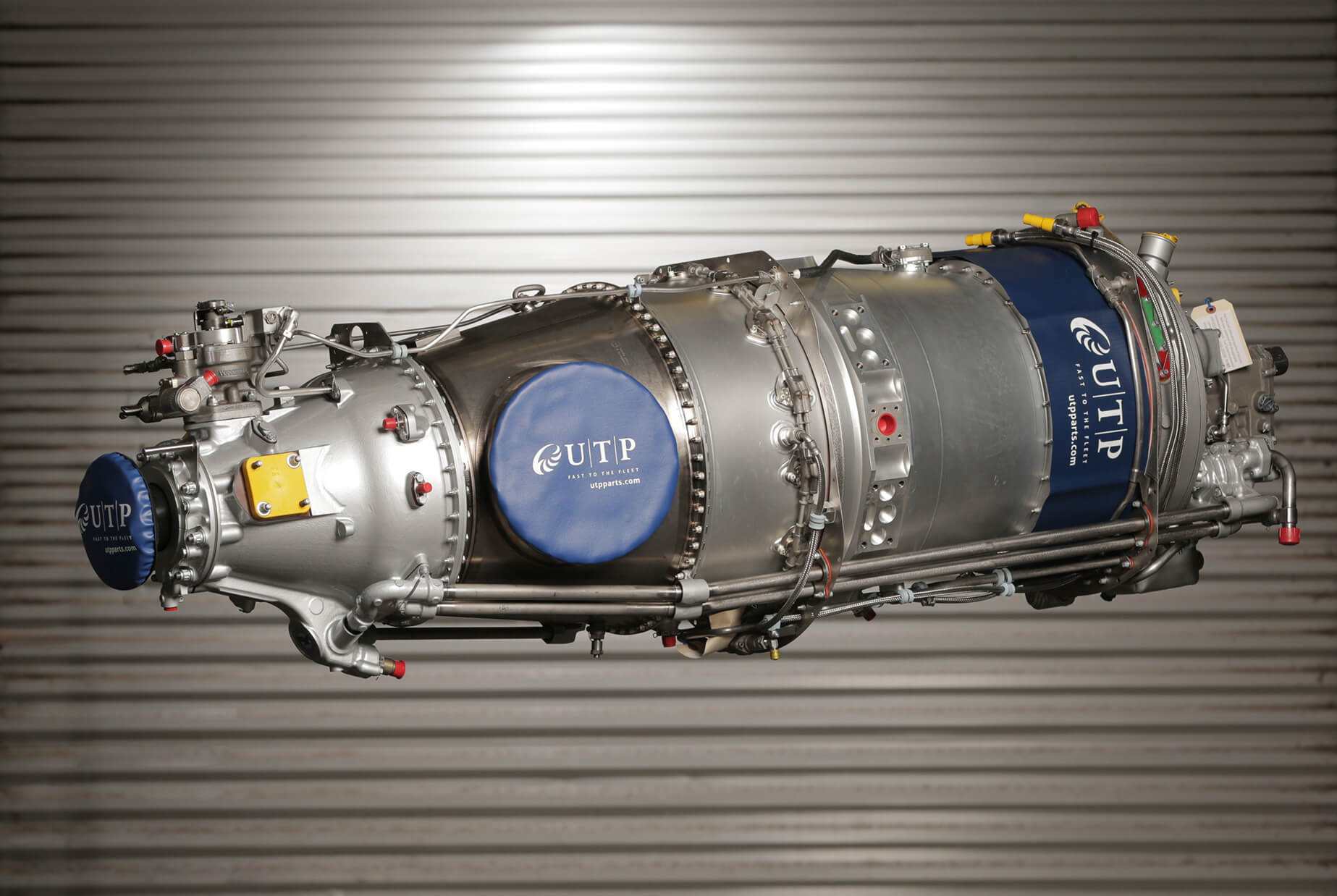
PT6A-60A Engine Profile: The King Air 200 Powerplant
The PT6A-60A produces 1,050 shaft horsepower and is the primary powerplant for the Beechcraft King Air 200 series, one of the most produced and widely operated turboprop aircraft in aviation history. With over 2,000 King Air 200 series aircraft delivered globally across business aviation, charter, air ambulance, cargo, and government roles, the PT6A-60A benefits from one of the largest installed fleet bases of any turboprop engine in service.
The PT6A-60A operates in the same 1,050 to 1,100 shp power band as the PT6A-52, which powers the King Air 350. The two variants are not interchangeable—each is approved only for its designated airframes and carries distinct Part Numbers, gearbox configurations, and installation requirements. Buyers sourcing a PT6A-60A must verify the correct designation against their aircraft TCDS and serial number before any sourcing process begins.
In addition to the King Air 200 series, the PT6A-60A powers the Beechcraft 1900 regional commuter aircraft. The 1900 fleet introduces a distinctly different buyer profile—regional airlines and cargo operators running high-utilization, high-cycle operations—with important implications for condition assessment that are covered in detail below.
PT6A-60A Airframe Applications
The PT6A-60A is approved for a range of certified aircraft across business aviation, commuter, and cargo segments. Primary applications include:
| Aircraft | Operator Profile | Configuration Notes |
| Beechcraft King Air 200 | Business aviation, charter, air ambulance, government | Primary application; confirm designation against aircraft S/N and TCDS |
| Beechcraft King Air B200 | Business aviation, corporate, ISR | Updated avionics; same engine designation as King Air 200 |
| Beechcraft King Air B200GT | Business aviation with winglets and enhanced systems | Verify variant designation for specific S/N range |
| Beechcraft 1900 | Regional commuter, cargo, high-utilization operations | High-cycle operating environment; see condition notes below |
| Beechcraft 1900C / 1900D | Regional commuter with stand-up cabin | Same PT6A-60A designation; confirm TCDS for variant specifics |
| TCDS Verification: Always verify the PT6A-60A designation against your specific aircraft serial number and Type Certificate Data Sheet before sourcing. UTP confirms applicability before presenting any options. |
Why the PT6A-60A Has One of the Deepest Secondary Markets in the PT6A Family
Secondary market depth for any engine variant is primarily a function of installed fleet size. The larger the operating fleet, the more engines enter the secondary market through TBO events, aircraft sales, fleet transitions, and maintenance shop releases. The PT6A-60A benefits from two large contributing fleets, the King Air 200 series and the Beechcraft 1900 series, which together represent thousands of individual engines in service globally.
This fleet depth creates consistent supply across all condition classes: run-out cores from operators reaching TBO, mid-time serviceable units removed during aircraft sales or fleet transitions, and freshly overhauled engines released from multiple competing repair stations. The resulting market dynamics typically produce shorter lead times, more available options at any given price point, and more competitive overhaul pricing compared to lower-volume variants.
For buyers, this market depth also means greater selectivity. A PT6A-60A buyer can afford to be specific about condition requirements, documentation quality, and overhaul facility, rather than accepting the first available option. UTP leverages this market depth to source PT6A-60A options that meet documented buyer specifications—not just whatever is immediately available.
PT6A-60A Sourcing: Business Aviation vs. Commuter Operations
The PT6A-60A serves two fundamentally different operating profiles, and the distinction matters significantly for condition assessment and pricing.
King Air 200 Business Aviation Profile
King Air 200 aircraft in business aviation, charter, and corporate roles typically accumulate hours at moderate utilization rates with longer average flight segments. Engines in this service profile accumulate fewer thermal cycles per hour than high-frequency short-haul operations. A 3,000-hour TSO PT6A-60A from a business aviation operator may have 1,500 to 2,000 cycles—a relatively low cycle count for that hour total. Hot section condition in well-maintained business aviation engines generally tracks closely with TSO.
Beechcraft 1900 Commuter and Cargo Profile
Beechcraft 1900 aircraft in regional commuter and cargo operations accumulate cycles at much higher rates. Short-haul routes with multiple daily cycles generate two to four cycles per flight hour, meaning a 1,900-hour TSO engine from a high-utilization commuter operation may have accumulated 4,000 to 7,000 cycles. High thermal cycling accelerates hot section wear at a rate independent of total flight hours. A commuter PT6A-60A at 1,500 hours TSO may have hot section condition equivalent to a business aviation engine at 2,500 hours TSO or more.
For any PT6A-60A sourced from a commuter or cargo operator, a current borescope inspection and a cycle count in addition to TSO are mandatory due diligence. Never evaluate a commuter-service PT6A-60A on TSO alone. UTP identifies the operating history of PT6A-60A units before presenting them to buyers and flags commuter or cargo provenance as a material condition factor.
Matched PT6A-60A Pair Sourcing for Beechcraft 1900 Operators
The Beechcraft 1900 is a twin-engine aircraft. Operators replacing both PT6A-60A engines simultaneously can source a matched pair that aligns TSN, TSO, operating history type, and condition class across both powerplants. For high-utilization 1900 operators, matched pair alignment that accounts for cycle count, not just TSO, is particularly important, as misaligned cycle histories can result in one engine requiring hot section work well ahead of the other.
UTP coordinates matched PT6A-60A pair sourcing by identifying two units from compatible sources with closely aligned documentation and operating history profiles. This process takes longer than single-unit sourcing but delivers significant maintenance scheduling benefits for 1900 operators running high-cycle operations. Contact UTP with your aircraft serial number, both engine serial numbers, TSN, TSO, and estimated cycle count for both engines to initiate a matched pair discussion.
PT6A-60A Engine Condition Guide
New / Zero-Time
Factory-new PT6A-60A engines are available on a limited basis as new surplus stock. OEM new production of this variant continues to support new King Air 200 and Beechcraft 1900 deliveries, but new surplus units for the secondary market are infrequent. New units carry the full 3,500-hour TBO, complete manufacturer documentation, and the lowest near-term maintenance exposure.
Serviceable Mid-Time
Operated PT6A-60A engines with documented TSN, TSO, and—for commuter-sourced units—cycle count. The large installed fleet creates consistent availability of mid-time units across a wide range of remaining TBO hours. Standard due diligence: complete logbook review, AD compliance verification, borescope inspection, and cycle count verification for commuter-history engines. Mid-time units offer the strongest value relative to acquisition cost for operators managing budget constraints.
Overhauled / Zero-Time Since Overhaul
PT6A-60A engines restored to serviceable or new-limits condition by an FAA-certificated repair station with PT6A-60A ratings. A zero-time overhaul ships with a new FAA Form 8130-3 and resets both TSN and TSO. The large installed fleet supports multiple competing overhaul facilities, which generally produces more competitive pricing than lower-volume variants. Confirm the facility holds current FAA repair station certification and specific PT6A-60A authorization.
Run-Out / Core
PT6A-60A cores are consistently available due to the large fleet size and steady rate of TBO events. Core value depends on TSN/TSO, cycle history, logbook completeness, and hot section condition. UTP accepts PT6A-60A cores as trade-in toward serviceable or overhauled replacement units, including as part of a matched pair exchange for 1900 operators. Contact UTP with engine serial number, TSN, TSO, and cycle count for a core evaluation.
What Most PT6A-60A Buyers Get Wrong
The most common mistake in PT6A-60A transactions is evaluating commuter-service engines using the same criteria as business aviation engines. TSO is a reliable condition proxy for business aviation PT6A-60A units where cycles-per-hour are moderate. For commuter and cargo engines, TSO understates the true wear state of the hot section. Buyers who compare a 1,500-hour TSO business aviation engine against a 1,500-hour TSO commuter engine on price alone routinely discover during installation inspection or first borescope that the commuter engine has meaningfully more hot section exposure. The cycle count is the missing variable that price-focused buyers overlook.
The second common mistake is failing to leverage the market depth. The PT6A-60A secondary market is large enough that buyers who accept the first available option often leave better-documented, better-condition units on the table. The depth of this market rewards buyers who specify their requirements clearly and allow adequate sourcing time. UTP presents multiple qualified options to PT6A-60A buyers where the market supports it, allowing condition and documentation comparison before commitment.
PT6A-60A Engine Buying Checklist
- Confirm PT6A-60A variant designation against aircraft TCDS and serial number
- Verify complete and continuous logbook records from new with no missing entries
- Confirm full AD compliance record with all applicable directives addressed
- Request current borescope inspection report from an independent A&P mechanic
- For commuter or cargo-history engines: request cycle count and verify against TSO
- Confirm overhaul facility holds current FAA repair station certificate with PT6A-60A ratings
- Verify FAA Form 8130-3 is present, current, and matches the engine serial number
PT6A-60A Engine Pricing: Market Overview
The PT6A-60A trades in the high end of the PT6A price spectrum, consistent with its 1,050 shp power class. The deep secondary market creates more competitive pricing than lower-volume variants—particularly for mid-time and overhauled units where multiple qualified options are typically available. Business aviation-history engines price at a premium to commuter-history engines at equivalent TSO, reflecting the lower cycle count and better expected hot section condition.
| Market pricing as of Q2 2026. Business aviation-history engines typically price 10–20% above commuter-history engines at equivalent TSO. |
| Condition | Typical Price Range | Notes |
| Run-out / Core | $70,000 – $130,000 | Commuter cores may price lower; evaluate cycle count and hot section |
| Serviceable Mid-Time | $170,000 – $340,000 | Business aviation history commands premium; verify cycle count on commuter units |
| Overhauled / Zero-Time | $280,000 – $450,000 | Competitive pricing due to multiple qualified overhaul facilities |
| New / Factory New | Market on request | New surplus available periodically; storage verification required |
For Beechcraft 1900 twin-engine operations, evaluate total per-aircraft engine cost and cycle alignment across both powerplants. For King Air 200 operators, documentation quality and operating history type are stronger value indicators than acquisition price alone.
How to Buy a PT6A-60A Engine from UTP
Start with a direct inquiry. Provide your aircraft make, model, and serial number, required condition, preferred operating history type if applicable, and timeline. For Beechcraft 1900 operators replacing both engines, provide both engine serial numbers, TSN, TSO, and estimated cycle count. UTP confirms variant applicability, identifies options matching your specifications, and presents qualified units with full documentation details.
Support includes:
- PT6A-60A variant confirmation against aircraft TCDS and serial number
- Operating history identification—business aviation vs. commuter/cargo—before presenting options
- Cycle count verification for commuter and cargo-history units
- Matched pair sourcing for Beechcraft 1900 twin-engine replacements
- Pre-purchase borescope inspection coordination
- Core exchange valuation for run-out PT6A-60A units
All PT6A-60A engines ship with complete logbook copies, current FAA Form 8130-3, and an AD compliance summary. Export documentation and EASA Form 1 equivalency paperwork available for international buyers.
Frequently Asked Questions—PT6A-60A Engines for Sale
The PT6A-60A is the primary engine for the Beechcraft King Air 200, King Air B200, King Air B200GT, and Beechcraft 1900 series regional commuter aircraft, along with select configurations of related platforms. The King Air 200 series is one of the largest turboprop fleets in the world, which is a primary driver of the strong PT6A-60A secondary market. Always verify the exact PT6A-60A designation against your specific aircraft serial number and TCDS before sourcing. UTP confirms applicability before presenting any sourcing options.
The PT6A-60A benefits from one of the largest installed fleet bases of any PT6A variant. The Beechcraft King Air 200 series, in production since 1974, has sold more than 2,000 units globally across business aviation, charter, air ambulance, cargo, and government roles. The Beechcraft 1900 series adds several hundred additional airframes to the installed base. This fleet depth means engines enter the secondary market continuously through scheduled TBO events, aircraft sales, and fleet transitions, creating consistent supply across all condition classes with shorter lead times than most other PT6A variants.
King Air 200 operators sourcing a used PT6A-60A should prioritize documentation completeness over price. A complete and continuous logbook from new, a current AD compliance record, and a borescope inspection report from an independent A&P mechanic are the three non-negotiable due diligence items. Given the large number of PT6A-60A units in the market, buyers occasionally encounter engines with incomplete records that are priced attractively to move quickly. Engines with documentation gaps require significantly more investment to resolve during installation or subsequent maintenance events than the acquisition discount typically justifies. UTP reviews documentation on every PT6A-60A before presenting options to buyers.
Yes. UTP sources matched PT6A-60A engine pairs for Beechcraft 1900 operators replacing both powerplants simultaneously. Matched pairs are coordinated to align TSN, TSO, overhaul history, and condition class across both engines. The Beechcraft 1900 is used heavily in regional cargo and charter operations where aircraft utilization rates are high and maintenance scheduling efficiency is a direct operating cost factor. For high-utilization 1900 operators, matched pair sourcing that aligns both engines to the same overhaul interval reduces total maintenance cost over the aircraft lifetime. Contact UTP with your aircraft serial number, both engine serial numbers, and TSN/TSO for a matched pair sourcing discussion.
Full overhaul costs for a PT6A-60A typically range from $150,000 to $250,000 per engine depending on the scope of work, parts replaced, and the overhaul facility. The strong installed fleet base means multiple FAA-certificated repair stations actively compete for PT6A-60A overhaul work, which generally produces more competitive pricing than lower-volume variants. Mid-time overhauls targeting the hot section specifically can be performed for $60,000 to $120,000 in many cases. These ranges vary based on parts condition found during teardown, current OEM parts pricing, and facility labor rates. UTP can provide referrals to certificated PT6A-60A overhaul facilities upon request.
Beechcraft 1900 aircraft operated in regional commuter and cargo roles accumulate engine cycles at much higher rates than business aviation King Air 200 operators. A PT6A-60A with 1,500 hours TSO from a high-cycle 1900 commuter operation may have two to three times the number of thermal cycles as an equivalent-hour engine from a King Air 200 used in business aviation. High thermal cycling accelerates hot section wear independent of total flight hours. When sourcing a PT6A-60A from a commuter or cargo operation, always request the cycle count in addition to TSO, and require a current borescope inspection. An engine with high TSO from low-cycle business aviation use typically carries meaningfully more remaining hot section life than an equivalent-hour commuter engine.