

 EN
EN  ES
ES UTP sources PT6A turboprop engines for sale across all variants—from the 550 shp PT6A-20 to the 1,200 shp PT6A-140—in new, used, and overhauled condition with full documentation and verified airworthiness on every unit.
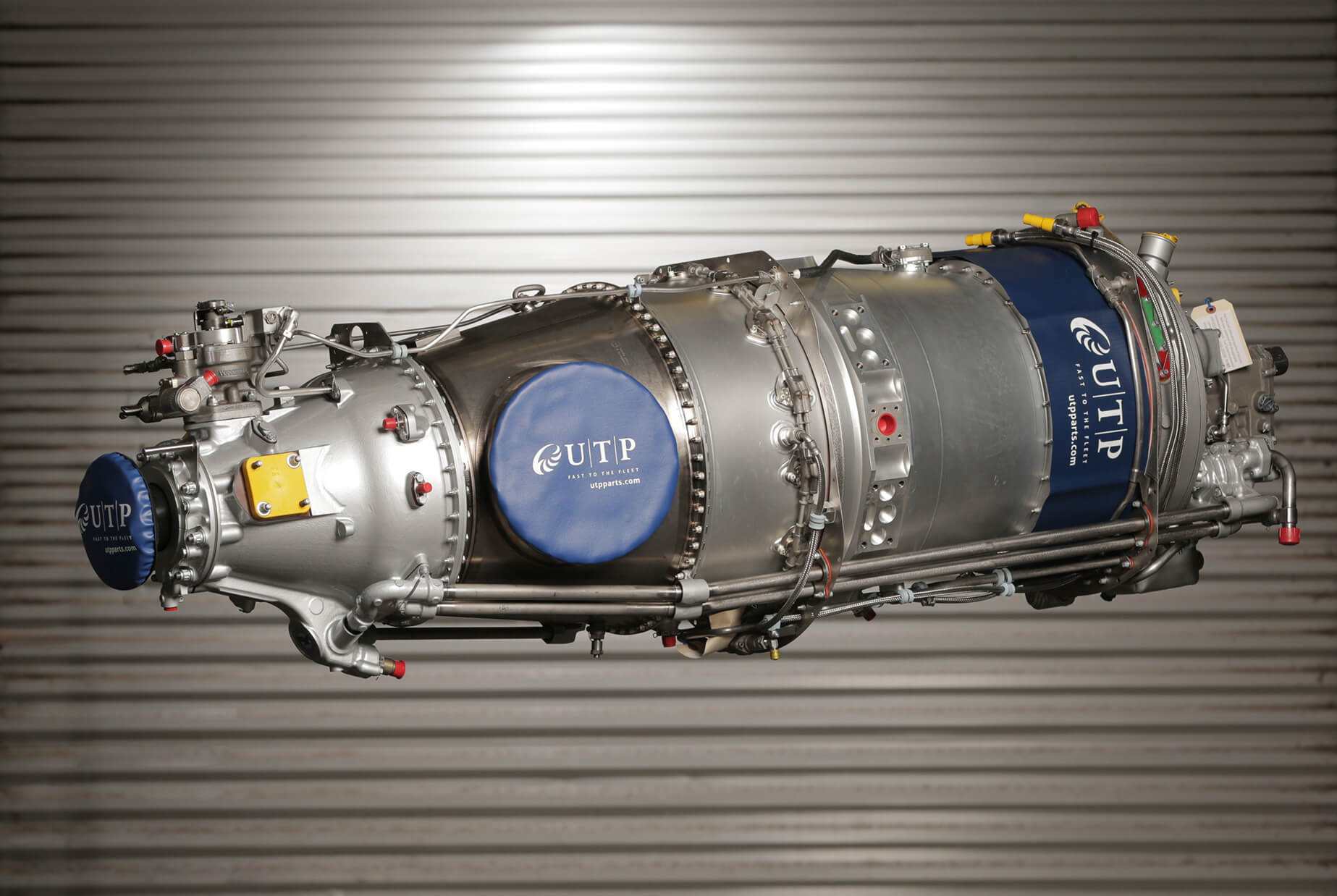
What PT6A Means—and Why the Designation Matters
PT6A is the turboprop variant designation within the broader Pratt & Whitney Canada PT6 engine family. The A identifies engines configured with a reduction gearbox to drive a propeller shaft—the powerplant configuration used in fixed-wing turboprop aircraft. This distinguishes PT6A engines from the PT6B (turboshaft for light helicopters), PT6C (single-spool turboprop design), and PT6T Twin Pac (twin-engine helicopter configuration).
Buyers who search specifically for PT6A engines typically know their aircraft, their operating environment, and the maintenance history they need. The designation narrows the field from the broader PT6 product family to the specific turboprop configuration required for airframes including the Cessna Caravan family, Beechcraft King Air series, Pilatus PC-12, and more than 100 additional certified aircraft types. Knowing you need a PT6A—and which PT6A variant specifically—is the starting point for every sourcing conversation.
How PT6A Engines Are Sourced Through UTP
UTP sources PT6A engines through active relationships with overhaul facilities, fleet operators, leasing groups, and engine brokers across North America, Europe, and Asia-Pacific. Most PT6A transactions are fulfilled through this network rather than from static inventory—giving buyers access to units not publicly listed, including recently removed fleet engines, freshly completed overhaul events, and core engines available for exchange.
Every PT6A option presented by UTP is reviewed for documentation completeness before being offered to a buyer. This includes logbook review for continuous TSN/TSO records, AD compliance verification, overhaul history confirmation, and variant-to-airframe compatibility check against the aircraft’s Type Certificate Data Sheet. For common PT6A variants, qualified options are typically identified within 5 to 15 business days. AOG situations receive expedited handling—contact UTP directly with your variant, condition requirement, and timeline.
PT6A Variant Selection: Matching Engine to Mission
Selecting the correct PT6A variant requires verifying the exact engine designation against your aircraft’s Type Certificate Data Sheet—not just the variant family. The table below organizes common PT6A variants by primary mission application to assist buyers in matching the right unit to their aircraft and operation.
PT6A Engine for Sale—Variants Organized by Mission Application
| PT6A Variant | SHP | TBO (hrs) | Primary Mission & Airframes | Market Notes |
|---|---|---|---|---|
| PT6A-27 | 680 shp | 3,600 | Utility/Cargo — Cessna 208 Caravan (early), Pilatus PC-6, DHC-6 Twin Otter | Highest secondary market volume; most competitive pricing |
| PT6A-34 | 750 shp | 3,600 | Agricultural/Cargo — Cessna 208B, Piper Cheyenne II, agricultural platforms | Strong core exchange market; active agricultural operator demand |
| PT6A-114A | 675 shp | 4,000 | Current Utility — Cessna 208B Grand Caravan EX | Current production; in-service EIS support available from P&WC |
| PT6A-42 | 850 shp | 3,600 | Business/Utility — Pilatus PC-12 (early), Cessna 425 Conquest | Growing availability as early PC-12 fleet enters secondary market |
| PT6A-52 | 1,100 shp | 3,600 | Business/Commuter — Beechcraft King Air 350 | High-power segment; strong charter and commuter operator base |
| PT6A-60A | 1,050 shp | 3,500 | Corporate/Commuter — Beechcraft King Air 200, Beechcraft 1900 | Deepest corporate market; strongest overall core availability |
| PT6A-67D | 1,200 shp | 3,600 | High-Performance Utility — Pilatus PC-12/45 | Growing secondary market as PC-12/45 fleet matures |
| PT6A-67R | 1,200 shp | 3,600 | High-Performance Utility — Pilatus PC-12 NG | Current-generation PC-12; secondary market developing |
| PT6A-140 | 1,200 shp | 5,000 | Latest Generation — Beechcraft King Air C90GTx | Highest TBO in family; lowest near-term maintenance exposure |
Critical: Variant substitution—even between variants that appear similar in specification—is only permitted under an FAA-approved STC or engineering order. Always confirm the required variant against your aircraft’s specific TCDS and serial number before beginning any sourcing process. Installing a non-approved variant creates an airworthiness finding and may void insurance coverage.
Identifying the Right PT6A for Your Specific Aircraft
The most reliable way to confirm your required PT6A variant is to locate your aircraft’s Type Certificate Data Sheet on the FAA website using your aircraft make, model, and series. The TCDS will specify the approved engine designations for your aircraft configuration. Your aircraft’s maintenance records and airframe logbooks will also document the currently installed engine variant and serial number.
For aircraft with existing STCs for variant upgrades—common in the agricultural, cargo, and charter segments—the STC documentation specifies the approved replacement variants and any installation requirements. This STC must transfer with the aircraft and be on file with your maintenance operation. If there is any uncertainty about the correct variant for your aircraft, UTP can perform a compatibility review against your aircraft serial number before any engine is sourced.
Choosing the Right PT6A Condition for Your Operation
The appropriate engine condition depends on your operation’s budget, maintenance reserves, and planned service life. Each condition class carries a different risk and cost profile.
Zero-Time Overhauled
A PT6A restored to new-limits condition by an FAA-certificated repair station, shipping with a new FAA Form 8130-3. Best for operators prioritizing the longest time before the next scheduled maintenance event and lowest near-term exposure. Typical range: $300,000 to $700,000+ depending on variant.
Mid-Time Serviceable
An overhauled PT6A with hours accumulated since the overhaul event. Strong value for operators who can manage a shorter remaining TBO interval and want a documented overhaul baseline. Requires careful logbook review and a borescope inspection. Typical range: $150,000 to $400,000.
New / Zero-Time
Factory-new PT6A engines with full manufacturer TBO and complete factory documentation. New surplus engines—manufactured but never installed—may be available at a discount but require storage records review. Best for new aircraft acquisitions and fleet standardization programs.
Run-Out / Core
PT6A engines at or beyond TBO requiring overhaul before return to service. Used in core exchange programs or as the basis for a planned shop visit. Core value depends on variant, TSN/TSO, logbook completeness, and physical condition of the hot section and gearbox. Typical range: $40,000 to $120,000.
PT6A Engine Documentation: What Must Be Present
Every PT6A engine entering service on a U.S.-registered certificated aircraft requires a complete documentation package. Verify each of the following before accepting any unit from any source:
- Original logbooks — complete and continuous from new, with no missing entries. TSN and TSO clearly documented through every overhaul event.
- FAA Form 8130-3 — current airworthiness approval tag with part number, serial number, condition, and certifying repair station. Must accompany the engine.
- AD compliance record — written documentation confirming compliance with all applicable Airworthiness Directives. Open ADs are an immediate disqualifier.
- Overhaul facility records — signed shop work orders confirming scope of work, parts replaced, and findings. Verify the facility holds current FAA repair station certification with turbine engine ratings.
- STC documentation — all approved modification paperwork must transfer with the engine.
Documentation gaps found after installation cost significantly more to resolve than gaps found before purchase. UTP reviews all five elements on every PT6A before presenting it to a buyer.
PT6A Engine Buying Checklist—Verify Before Purchase
- Confirm exact PT6A variant against aircraft TCDS and serial number
- Verify complete and continuous logbook records with no missing entries or unexplained gaps
- Confirm AD compliance—all applicable directives documented with no open items
- Request borescope inspection report from a qualified A&P mechanic
- Verify overhaul facility holds current FAA repair station certification with turbine engine ratings
- Confirm FAA Form 8130-3 is present, current, and matches the specific engine serial number
- Verify all STC and modification documentation transfers with the engine
PT6A Engine Pricing: Current Market Overview
PT6A engine pricing is driven by variant, condition class, remaining TBO, and current secondary market demand. The table below provides reference ranges by condition. Variant tier significantly affects pricing within each condition class—a PT6A-140 overhauled unit commands a meaningful premium over a PT6A-27 in the same condition class.
| Market pricing as of Q2 2026. Prices vary by variant, condition, and market availability. Contact UTP for current pricing on specific variants. |
| Condition | Typical Price Range | Variant Impact on Pricing |
| Run-Out / Core | $40,000 – $120,000 | Entry/utility variants (PT6A-27, PT6A-34) at lower end; high-HP variants (PT6A-60A, PT6A-140) at upper end |
| Serviceable Mid-Time | $150,000 – $400,000 | PT6A-27/34 range: $150K–$250K. PT6A-60A: $200K–$350K. High-HP variants: $250K–$400K |
| Overhauled / Zero-Time | $300,000 – $700,000+ | Entry variants from $300K. PT6A-60A from $400K. PT6A-140 and premium variants to $700K+ |
| New / Factory New | Market on request | Current production variants; pricing by model year and specification |
Total cost of ownership—not acquisition price—is the reliable measure of PT6A engine value. A low-priced unit with incomplete documentation, unresolved ADs, or an undocumented overhaul history can generate airworthiness findings that cost multiples of the price differential. Evaluate remaining TBO, overhaul facility reputation, and the full documentation package before discussing price.
How to Buy a PT6A Engine from UTP
Orders begin with a direct inquiry by part number, engine serial number, PT6A variant, required condition, and Start with a direct inquiry. Provide your aircraft make, model, and serial number, the required PT6A variant designation, preferred condition, and timeline. UTP verifies compatibility, initiates sourcing through its global network, and presents qualified options with full documentation details before any commitment is required.
Every PT6A ships with complete logbook copies, current 8130-3 airworthiness documentation, and an AD compliance summary. Shipping options include direct to your maintenance facility, FBO drop-ship, or warehouse pickup. International buyers receive export documentation and EASA Form 1 equivalency paperwork. AOG situations receive priority sourcing—contact UTP directly for time-sensitive needs.
Frequently Asked Questions — PT6A Engine for Sale
PT6A refers to the turboprop variant of the Pratt & Whitney Canada PT6 engine family. The A designation identifies turboprop-configured engines used in fixed-wing aircraft, distinguishing them from the PT6B (turboshaft for light helicopters), PT6C (turboprop single-spool design), and PT6T Twin Pac (twin-engine helicopter configuration). When buyers search for a PT6A engine, they are specifically looking for the turboprop family that powers the Cessna 208 Caravan, Beechcraft King Air, Pilatus PC-12, and more than 100 additional aircraft types.
The correct PT6A variant for your aircraft is specified in the aircraft’s Type Certificate Data Sheet (TCDS) issued by the FAA. Substituting one PT6A variant for another is only permitted under an FAA-approved STC or engineering order—even if the variants appear similar in specification. Locate your aircraft’s TCDS by make, model, and serial number on the FAA website, or contact UTP with your aircraft details for a compatibility review before purchasing.
PT6A engines are turboprop engines for fixed-wing aircraft, driving a propeller through a reduction gearbox. PT6B engines are turboshaft engines for light helicopters, delivering power through a shaft to the rotor system. The two designations are not interchangeable and serve entirely different airframe applications. Operators of fixed-wing turboprop aircraft—Cessna Caravans, King Airs, Pilatus aircraft—are looking for PT6A engines specifically.
For common PT6A variants such as the PT6A-27, PT6A-34, and PT6A-60A, UTP typically identifies qualified options within 5 to 15 business days depending on required condition and current market availability. Less common variants or specific condition requirements may extend the timeline. AOG situations receive priority sourcing—contact UTP directly with your variant, required condition, and timeline for an expedited response.
A mid-time PT6A—one that has been overhauled but has accumulated additional hours since that event—can represent strong value for operators who do not need a zero-time unit. Key evaluation factors are hours remaining to next TBO, logbook quality and continuity, confirmed AD compliance, and whether a recent hot section inspection has been performed. A well-documented mid-time PT6A from a reputable overhaul facility at $150,000 to $250,000 often delivers better total cost of ownership than a poorly documented zero-time unit at a similar price.
UTP maintains active PT6A engine inventory across major variants and conditions, with stock levels changing frequently based on acquisitions from overhaul facilities, fleet operators, and dealer networks. Common variants including the PT6A-27, PT6A-34, PT6A-60A, and PT6A-114A are often available for near-term delivery. Contact UTP with your specific variant, condition requirement, and delivery timeline for a current availability check. Expedited sourcing is available for AOG situations.